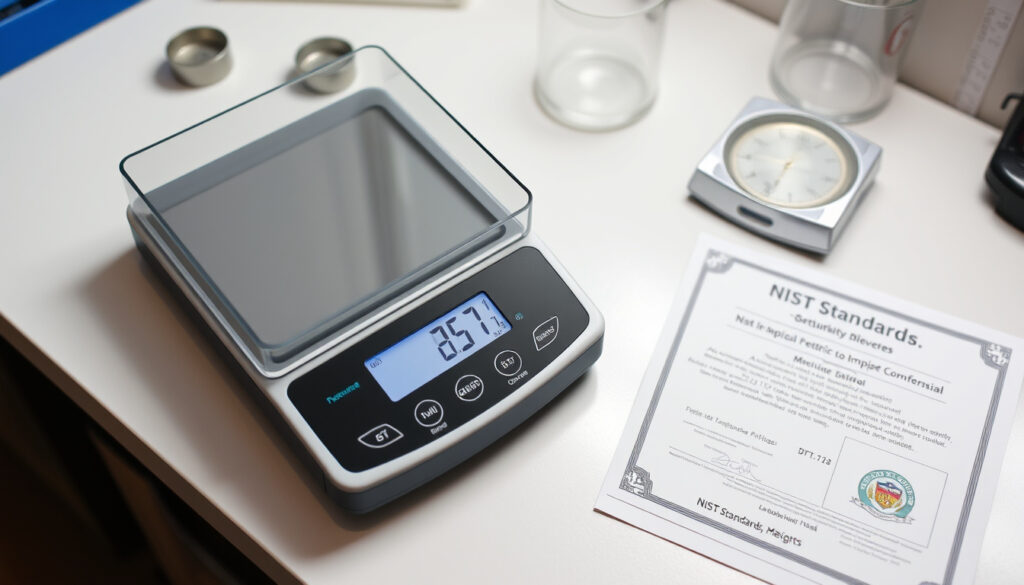
100 Grams to Oz – Exact NIST Conversion (3.527)
Converting between grams and ounces comes up frequently in cooking, shipping, and everyday measurements. The conversion between these two units follows precise international standards that have been established for decades. Understanding the exact relationship helps ensure accuracy whether you’re measuring ingredients in the kitchen or calculating package weights for shipping.
The gram, a metric unit of mass, and the ounce, a unit used primarily in the United States and a few other countries, belong to different measurement systems. The metric system is decimal-based and used globally for scientific and most commercial applications, while the imperial system featuring ounces and pounds remains common in American daily life. Converting between them requires knowing the specific conversion factor, which depends on which type of ounce you’re working with.
This distinction matters more than many people realize. The type of ounce being used significantly affects the conversion result, and using the wrong one can lead to meaningful errors in recipes, jewelry transactions, or commercial trade. This article provides the precise conversion factor based on official standards and explains the differences between ounce types.
How Many Ounces Are in 100 Grams?
One hundred grams equals approximately 3.527 ounces when using the standard avoirdupois ounce, which is the type used for everyday measurements like food, packages, and general goods. This conversion factor is established by the National Institute of Standards and Technology and represents the legal definition used in United States commerce.
Quick Answer: 3.527 Ounces
The most commonly referenced conversion places 100 grams at 3.527396 ounces when calculated using the full precision factor. For practical everyday purposes, many people round this to 3.5 ounces, which works well for rough estimations in the kitchen or when extreme precision isn’t required.
Using the exact NIST factor of 28.349523125 grams per avoirdupois ounce, 100 divided by this value yields 3.527396195 ounces. When rounding to three decimal places, this becomes 3.527 oz.
Exact vs Approximate Values
The distinction between exact and approximate values matters most in scientific contexts, international trade, and when following precise recipes. For most home cooking scenarios, rounding 100 grams to 3.5 ounces introduces only minimal error. However, in commercial baking or pharmaceutical applications, the difference between 3.5 and 3.527 ounces compounds with larger quantities.
| Measurement | Grams | Ounces (avdp) |
|---|---|---|
| 100g | 100 | 3.527 |
| 1 oz | 28.35 | 1 |
| 50g | 50 | 1.764 |
| 200g | 200 | 7.055 |
| 500g | 500 | 17.637 |
How to Convert Grams to Ounces (Step-by-Step)
The conversion process follows a straightforward mathematical formula that works for any gram-to-ounce calculation. Once understood, this formula allows you to convert between the units without relying on online tools or charts. The same basic approach applies whether you’re converting a single measurement or working with larger quantities.
The Formula
To convert grams to avoirdupois ounces, divide the number of grams by the conversion factor 28.349523125. This can be expressed as:
Ounces = Grams ÷ 28.349523125
For 100 grams specifically: 100 ÷ 28.349523125 = 3.527396195 oz
An equivalent approach multiplies the gram value by the inverse factor, which equals approximately 0.03527396195. This gives the same result when properly rounded:
Ounces = Grams × 0.03527396195
Many recipes and quick references use the rounded factor of 28.35 grams per ounce. This simplifies mental math: 100 ÷ 28.35 ≈ 3.53 oz. For most cooking purposes, this approximation produces acceptable results.
Using a Calculator
When performing conversions for precise applications, using a calculator with sufficient decimal places helps avoid rounding errors that can accumulate. Scientific calculators typically provide enough precision for most needs. For the highest accuracy required in legal metrology or scientific research, specialized conversion software or verified reference tables should be used.
The National Institute of Standards and Technology publishes official conversion tables that provide values rounded to specific decimal places for different applications. These tables are used in legal trade contexts to ensure consistency across jurisdictions.
Related Conversions: Grams in 1 Ounce and More
Understanding the reverse conversion—how many grams are in one ounce—provides useful context and allows for cross-checking calculations. This relationship also connects to broader unit conversions including pounds and volume measurements, though volume conversions require additional information about ingredient density.
1 Ounce to Grams
One avoirdupois ounce equals exactly 28.349523125 grams according to the NIST definition. This conversion works in reverse as well: dividing 1 by 28.349523125 gives the gram-to-ounce factor of approximately 0.035274. The precise relationship means these conversions are exact values within the defined system, not approximations.
It’s worth noting that this applies specifically to avoirdupois ounces, the standard ounce used in the United States for most everyday measurements. A different ounce type—troy ounces—applies to precious metals and has a different conversion factor of approximately 31.1034768 grams per troy ounce.
100g to Pounds and Cups
Converting 100 grams to pounds requires an additional step since a pound contains 453.59237 grams. Dividing 100 by this factor yields approximately 0.2205 pounds, or just over two ounces shy of a quarter pound. For context, 100 grams is roughly equivalent to:
- About 3.5 ounces (0.22 pounds)
- Approximately half a cup of water by weight
- Roughly three-quarters cup of loosely packed flour
- A medium-sized apple
Converting grams to cups requires knowing the density of the specific ingredient. A cup of flour weighs considerably less than a cup of water or sugar. For recipe accuracy, measuring by weight rather than volume is strongly recommended. Many professional bakers insist on weight-based measurements for consistent results.
For more detailed height and measurement conversions, see the 5 11 In CM – Exact 180.34 cm Conversion Guide.
Understanding Avoirdupois vs Troy Ounces
The distinction between avoirdupois and troy ounces represents one of the most important nuances in weight conversion. Confusing these two units leads to meaningful errors, particularly when dealing with valuable materials. Understanding which applies in a given situation prevents costly mistakes in purchasing, selling, or shipping goods.
Avoirdupois ounces, derived from the Old French term meaning “goods by weight,” serve as the standard for most commercial and household applications. This system divides a pound into 16 ounces, with each ounce weighing 437.5 grains or approximately 28.35 grams. Food products, consumer goods, and postal packages all use this measurement.
Troy ounces originated at the medieval trade fairs in Troyes, France, and became standardized for weighing precious metals and gemstones. The troy system divides a troy pound into only 12 ounces, but each troy ounce contains 480 grains—significantly heavier than an avoirdupois ounce. A troy ounce equals approximately 31.10 grams.
| Unit Type | Grams (exact) | Common Use |
|---|---|---|
| Avoirdupois ounce | 28.349523125 | Cooking, shipping, everyday |
| Troy ounce | 31.1034768 | Gold, silver, jewels |
| Avoirdupois pound | 453.59237 | Body weight, groceries |
| Troy pound | 373.2417216 | Rare, historical metals |
Both systems share the grain as a common base unit, with one grain equaling exactly 0.06479891 grams. This shared origin explains why the two systems can be mathematically reconciled despite their different ounce and pound divisions. For those exploring luxury accessories, the Diamond Ring for Women – 2025 Buying Guide & Styles offers additional context on how weight measurements apply in jewelry contexts.
Using the troy ounce conversion, 100 grams equals approximately 3.215 troy ounces. This is notably less than the 3.527 avoirdupois ounces the same 100 grams represents—approximately 9.7% different. In practical terms, if you calculated the gold content of a 100-gram bar using avoirdupois ounces instead of troy ounces, you’d overestimate the gold by nearly 10%.
Standards and Historical Background
The modern conversion between grams and ounces traces its authority to international agreements and national standards organizations. The gram itself derives from the French metric system established during the revolutionary period at the end of the 18th century. The kilogram, originally defined by a physical artifact called the International Prototype of the Kilogram, has since been redefined based on fundamental physical constants.
The avoirdupois system developed separately in medieval England, with the word coming from Anglo-Norman French. The specific conversion factor of 28.349523125 grams per ounce resulted from international agreements and subsequent refinements in measurement science. The United Kingdom and United States agreed on these relationships as part of the International Yard and Pound Agreement of 1959, though the United States continued using certain definitions for legal metrology purposes.
NIST Handbook 44 establishes the official specifications for weights and measures used in commerce within the United States. This publication defines the exact relationship between metric and imperial units and provides tolerances for commercial weighing and measuring devices. Any scale used in trade must meet calibration standards traceable to these definitions.
What Is Certain and What Remains Unclear
Established Information
- 100g = 3.527396195 oz (avoirdupois, exact calculation)
- 1 oz avdp = 28.349523125 g (NIST definition)
- 1 oz troy = 31.1034768 g (precious metals)
- Both systems use grain as base unit
- 1959 international agreement standardized conversions
Areas Requiring Context
- Fluid ounces confuse volume with weight
- Rounding decisions depend on application
- Some countries use local definitions
- Historical variations may appear in older texts
- Recipe precision needs vary by cooking style
Sources and References
The conversion factors presented in this article derive from authoritative sources in measurement science and legal metrology. The primary reference for United States commercial measurements is the National Institute of Standards and Technology, which maintains the official definitions and conversion tables used in trade.
“1 avoirdupois ounce = 28.349523125 grams”
Additional authoritative references include the International Bureau of Weights and Measures, which oversees the International System of Units, and NIST Special Publications that provide technical guidance on unit conversions. These organizations work together to ensure measurement consistency across international borders.
For further reading on measurement standards, the NIST Weights and Measures page provides detailed information on legal metrology requirements. The BIPM’s documentation on SI prefixes and base units offers additional context on the metric system’s structure.
Quick Summary
One hundred grams converts to 3.527 ounces when using the standard avoirdupois ounce defined by NIST as exactly 28.349523125 grams. This value represents the everyday ounce used for food, packages, and general commerce. For precious metals, the troy ounce applies, yielding approximately 3.215 ounces for the same 100-gram quantity. Understanding which ounce type applies prevents errors in recipes, shipping calculations, and transactions involving valuable materials. The conversion formula—dividing grams by 28.349523125 or multiplying by 0.03527396195—provides accurate results for any quantity.
Frequently Asked Questions
How many grams in an ounce?
One avoirdupois ounce contains exactly 28.349523125 grams. A troy ounce contains approximately 31.10 grams.
100 grams to pounds?
100 grams equals approximately 0.2205 pounds, or just over 3.5 ounces.
What does 100 grams look like?
100 grams is roughly equivalent to a medium apple, half a cup of water, or about three-quarters cup of loosely packed flour. A US nickel weighs 5 grams, so 20 nickels equal approximately 100 grams.
100g to cups?
The conversion depends entirely on the ingredient’s density. 100 grams of water equals about half a cup, while 100 grams of flour equals roughly three-quarters cup. Always weigh ingredients for recipe precision.
Is 100 grams about 3.5 ounces?
Yes, 100 grams rounds to approximately 3.5 ounces for everyday purposes. The precise value is 3.527 ounces using the NIST-defined conversion factor.
What’s the difference between avoirdupois and troy ounces?
Avoirdupois ounces (28.35g) are used for food and everyday goods, while troy ounces (31.10g) are used for precious metals. A troy ounce is about 10% heavier than an avoirdupois ounce.
How do I convert ounces to grams?
Multiply the number of ounces by 28.349523125 to get grams. For troy ounces, multiply by 31.1034768 instead.
More related posts
 Clothing Store Near Me – Best Shops in NJ and NYC
 Maison A Vendre Granby – 2024 Prices and Market Trends
 What Is April 24? History, Observances, and Controversies
 Swiss Ski Resort Explosion – Crans-Montana Fire Kills 40
 Trump News Today Canada – 25% Tariffs Take Effect on Imports
 Denmark vs Portugal Lineups: UEFA Nations League 2025
 Fix ‘iMessage Needs to Be Enabled to Send This Message’
 Brazilian Bum Bum Cream: What It Does, How to Use & Reviews