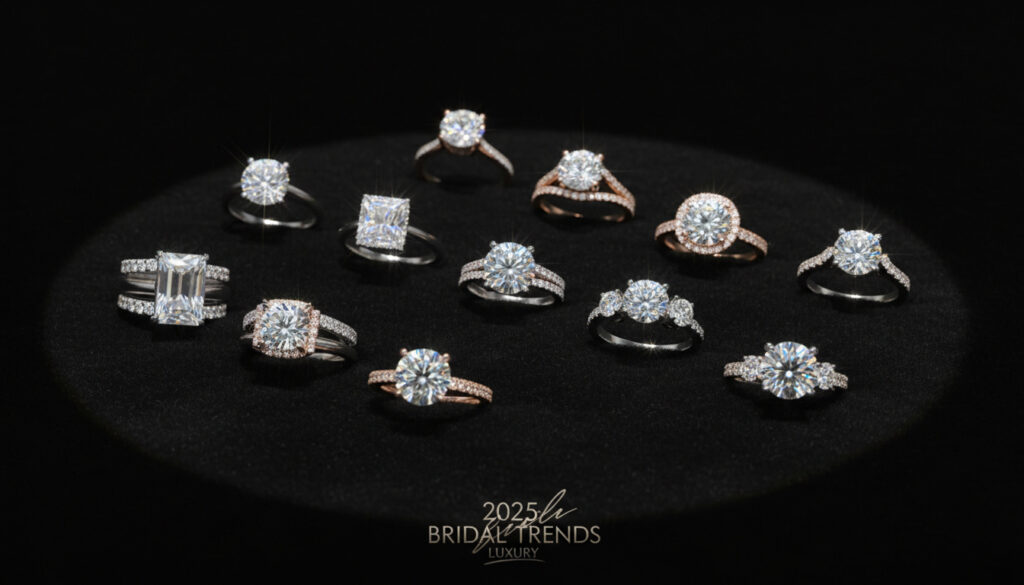
Diamond Ring for Women – 2025 Buying Guide & Styles
Selecting a diamond ring for women involves navigating the interplay of craftsmanship, geological quality, and personal symbolism. The modern market presents unprecedented variety, from classic solitaires to lab-grown alternatives that challenge traditional pricing structures. Understanding the fundamental grading criteria and stylistic distinctions ensures a decision grounded in both aesthetic preference and financial prudence.
Contemporary buyers prioritize ethical provenance alongside visual impact. With the Gemological Institute of America (GIA) establishing universal standards for both natural and laboratory-created stones, consumers now access detailed certifications that demystify the purchasing process. How to Choose the Perfect Engagement Ring 2025 Guide provides comprehensive frameworks for evaluating these technical specifications against individual lifestyle requirements.
How Do I Choose the Perfect Diamond Ring for Women?
The selection process demands systematic evaluation of four critical quality dimensions alongside stylistic preferences. Buyers must reconcile technical specifications with lifestyle requirements, ensuring the chosen piece endures daily wear while maintaining optical brilliance.
| Style | Characteristics | Price Considerations |
|---|---|---|
| Solitaire | Single center diamond, simple setting, maximum light reflection | Moderate; setting costs lower, budget maximized for center stone quality |
| Halo | Center stone surrounded by pavé diamonds, enhanced perceived size | Adds $500-$2,000; creates larger visual impact without proportional carat cost increase |
| Three-Stone | Triad representing past, present, future; symmetrical side stones | Higher than solitaire due to additional gems; premium for matching quality across three stones |
| Vintage | Milgrain edges, filigree details, asymmetrical or twisted bands | 10-20% premium for intricate craftsmanship; potential higher maintenance costs |
- Prioritize cut grade above all other characteristics; Excellent or Very Good ratings ensure optimal fire and scintillation.
- Select near-colorless grades (G-H) to balance visual whiteness with value, rather than paying premium for D-F categories.
- Target VS2-SI1 clarity for eye-clean appearance without microscope-visible inclusions.
- Consider 0.75 to 1.5 carats for daily wear durability; larger stones require more protective settings.
- Lab-grown diamonds offer 60-85% cost reduction while maintaining identical chemical composition to natural stones.
- Verify GIA certification for any purchase regardless of origin to ensure standardized grading.
- Average women’s finger sizes range between 6 and 7 US; slightly larger rings resize more easily than smaller adjustments.
| 4C Factor | Definition | Optimal Range for Women’s Rings |
|---|---|---|
| Cut | Proportions determining light reflection and brilliance | Excellent or Very Good grades only |
| Color | Absence of yellow or brown tinting | G-H (near-colorless) for value; D-F if budget permits |
| Clarity | Absence of internal inclusions and external blemishes | VS2-SI1 (eye-clean); avoid I grades for center stones |
| Carat | Weight measurement (1 carat = 0.2 grams) | 0.75-1.5 ct for comfort; 1.5+ ct for statement pieces |
| Lab vs Natural | Origin of crystalline structure | Both GIA-graded; lab-grown 60-85% less expensive |
| Metal Type | Setting material affecting durability and color | Platinum/white gold premium $1,000+ over yellow/rose |
What Are the Most Popular Styles of Diamond Rings for Women?
Current preferences reflect a dichotomy between minimalist permanence and ornate individualism. While solitaire settings retain dominance for engagement purposes, halo configurations continue gaining market share among cost-conscious buyers seeking amplified visual impact.
How Do Engagement and Wedding Diamond Rings Differ for Women?
Engagement rings function as ceremonial centerpieces, typically featuring prominent solitary diamonds or clustered arrangements that symbolize proposal intent. These pieces prioritize visual dominance through elevated settings that maximize light exposure.
Wedding bands serve complementary roles within bridal sets, designed for permanent wear alongside engagement rings. Contemporary trends favor eternity bands featuring continuous pavé diamonds or plain metal loops that facilitate comfortable stacking. Matching metal compositions between engagement and wedding rings remains standard, though mixed-metal pairings emerge as stylistic statements.
Elongated shapes—oval, marquise, and emerald cuts—create optical finger-lengthening effects while maximizing perceived carat weight. These configurations trend upward in 2025, with oval cuts specifically dominating market preferences.
What Is a Good Price for a Diamond Ring for Women?
Pricing hierarchies diverge dramatically based on origin and specifications. Laboratory-grown diamonds have disrupted traditional valuation models, offering chemically identical alternatives at significantly reduced costs.
Can Women Find Affordable Diamond Rings Without Sacrificing Quality?
Accessibility has improved markedly through technological advances in diamond synthesis. A 0.5 to 1 carat lab-grown stone with excellent cut ranges between $1,000 and $4,000, compared to $3,000 to $10,000 for natural equivalents. For 1 to 2 carat specimens, lab-grown options span $3,000 to $8,000 versus $10,000 to $25,000+ for mined diamonds.
Setting selections significantly influence final costs. Halo or three-stone configurations add $500 to $2,000 to base prices, while vintage or custom designs command 10-20% premiums. Metal selection further differentiates budgets, with platinum and white gold settings costing $1,000 or more above yellow or rose gold alternatives.
Allocating funds toward cut quality and carat weight while selecting near-colorless (G-H) grades and VS2-SI1 clarity maximizes visual impact per dollar. Lab-grown selections enable upgrades to halo or three-stone settings without exceeding comparable natural diamond expenditures.
What Are the Best Diamond Rings for Women in 2025?
Optimal selections balance current aesthetic movements with individual lifestyle constraints. Supersized stones influenced by celebrity selections gain traction, though practical daily wear considerations favor durable settings protecting 0.75 to 1.5 carat centers.
Twisted band designs and minimalist architectural settings characterize contemporary preferences. Colorful accents utilizing yellow or pink diamonds introduce chromatic variation, while data from 4M+ transactions indicates couples increasingly prioritize quality over quantity.
Vintage and antique-inspired designs with intricate milgrain or filigree detailing require more frequent professional maintenance than sleek modern settings. Buyers seeking low-maintenance options should prioritize smooth bezel or flush settings over raised prong configurations.
How Has Diamond Ring Selection Evolved Through History?
- : De Beers launches “A Diamond is Forever” campaign, establishing diamond rings as standard engagement symbols in Western markets.
- : E-commerce platforms revolutionize diamond retail, introducing virtual inspection tools and competitive transparent pricing.
- : Laboratory-grown diamonds emerge commercially, initially facing skepticism regarding quality equivalence.
- : Federal Trade Commission revises jewelry guidelines, requiring explicit disclosure of laboratory-grown origins.
- : Mainstream adoption of sustainable sourcing precedes; recycled metals and carbon-neutral synthesis gain priority.
- : Personalization technology and mixed-metal designs dominate market trends.
What Is Definitively Known About Diamond Origins and Value?
Established Certainties
- GIA certification standards apply identically to natural and laboratory-grown diamonds, evaluating cut, color, clarity, and carat without origin-based grade inflation.
- Chemical and optical properties of lab-grown diamonds match natural specimens; both consist of carbon atoms in isometric crystalline structures.
- FTC regulations mandate clear labeling of laboratory-created stones, protecting consumer transparency.
- Resale markets for natural diamonds demonstrate established, though fluctuating, valuation histories.
Remaining Uncertainties
- Long-term resale value stability for lab-grown diamonds remains unclear as secondary markets develop.
- Emotional and symbolic distinction between “billions-year-old” natural formation and laboratory synthesis varies significantly among individual buyers.
- Future regulatory changes regarding carbon footprint disclosures or synthesis method certifications are pending in multiple jurisdictions.
What Cultural Factors Shape Women’s Diamond Ring Preferences?
Contemporary selection patterns reflect broader shifts toward individual expression and ethical consumption. The 2025 market shows pronounced movement away from traditional round brilliants toward elongated fancy shapes that elongate finger appearance and maximize carat visibility.
Sustainability concerns increasingly influence purchasing decisions, with conflict-free guarantees and recycled metal settings transitioning from premium options to baseline expectations. This cultural pivot enables the rapid market share growth of laboratory-grown alternatives, which eliminate mining environmental impacts while reducing costs. For more information on various models, click on models de cotxets de nadó.
Practical lifestyle considerations simultaneously drive demand for lower-profile settings suitable for active professional environments, challenging the historical primacy of high-set solitaires. The modern buyer frequently prioritizes versatility—selecting rings that transition seamlessly between workplace appropriateness and ceremonial significance.
What Authority Sources Validate Diamond Quality Assessments?
Industry standards derive from gemological institutions that developed systematic evaluation methodologies. Certification protocols established by the Gemological Institute of America provide the definitive framework for comparing stones across global markets.
Cut remains the most critical factor in diamond brilliance. A precisely proportioned stone with Excellent or Very Good grades will outshine larger stones with inferior cut quality.
— Gemological Institute of America grading standards
VS2-SI1 clarity grades offer the optimal intersection of visual cleanliness and value. Inclusions at these levels typically require magnification to detect, making them indistinguishable from higher grades to the unaided eye.
— Diamond industry analysis, 2025
What Final Considerations Ensure a Successful Diamond Ring Purchase?
Successful acquisition requires balancing the four Cs against personal values and practical constraints. Diamond Ring Buying Guide for Women in 2025 emphasizes verifying GIA certification regardless of stone origin, ensuring standardized quality assessment. Whether selecting a classic solitaire or an ornate vintage reproduction, the optimal ring harmonizes geological quality with lifestyle functionality, creating an enduring symbol appropriate for daily wear and ceremonial significance alike.
Frequently Asked Questions
How should women clean diamond rings at home?
Soak briefly in warm water with mild dish soap, then gently brush with a soft toothbrush to remove accumulation beneath the setting. Avoid harsh chemicals or abrasive materials that might damage metal finishes or loosen prongs.
What does ethical sourcing mean for women’s diamond rings?
Ethical sourcing ensures diamonds originate from conflict-free zones without funding violence, alongside environmentally responsible mining or laboratory synthesis. Look for GIA certification and FTC compliance regarding lab-grown disclosures, plus recycled metal settings for additional sustainability.
How do I determine the right diamond ring size for women?
The average women’s ring size ranges between 6 and 7 US. Borrow an existing ring she wears on the correct finger for professional measurement, or purchase slightly larger if uncertain, as reducing size proves easier than expanding bands.
Are laboratory-grown diamonds considered real diamonds?
Yes. Laboratory-grown diamonds possess identical chemical composition, crystal structure, and optical properties to natural diamonds. The FTC recognizes them as genuine diamonds, requiring only disclosure of their laboratory origin.
How frequently should diamond rings undergo professional inspection?
Schedule ultrasonic cleaning and prong inspection every six months to prevent stone loss. Annual detailed examinations by certified jewelers identify structural weaknesses before they cause damage.
More related posts
 Costco St. John’s NL: Address, Hours & Membership Guide
 Brazilian Bum Bum Cream: What It Does, How to Use & Reviews
 Moose Tracks Ice Cream: Origin, Recipe & Nutrition Facts
 Attack on Titan Revolution Codes – Full List and How to Redeem
 The Other Boleyn Girl: True Story, Cast, Book & History
 Trump News Today Canada – 25% Tariffs Take Effect on Imports
 Punjab Kings vs Chennai Super Kings – Scorecard, Result and Stats
 Maison A Vendre Granby – 2024 Prices and Market Trends