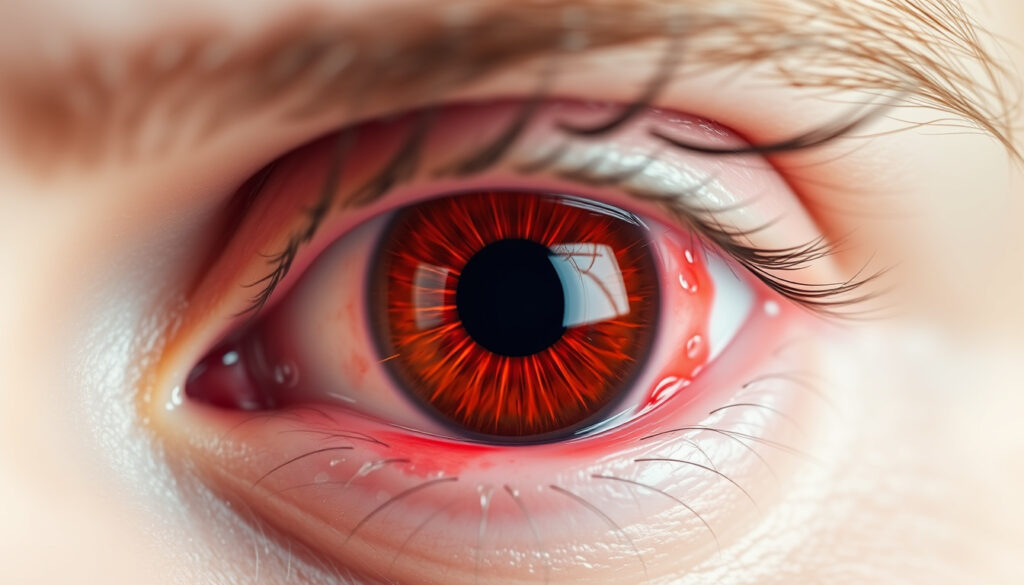
What Does Pink Eye Look Like? Symptoms & Identification Guide
If you’ve ever woken up with a red, itchy eye and immediately wondered whether you were dealing with pink eye or just allergies, you’re not alone. The question “what does pink eye look like” comes up constantly, and for good reason—those telltale symptoms are hard to ignore once you know what to spot. This guide walks you through the visual signs, sensation clues, and key differences from other eye conditions, using descriptions from the CDC and Mayo Clinic so you can identify what’s actually going on.
Appearance: Pink or red whites of eyes, puffy eyelids · Common Discharge: Crust on eyelashes · Sensation: Gritty, itchy · Contagious: Yes, highly · Duration: 7-14 days
Quick snapshot
- Pink eye is inflammation of the conjunctiva (Mayo Clinic)
- Symptoms include redness and discharge (CDC)
- Exact home remedy speed without medical input varies significantly
- Regional variations in pink eye prevalence not well documented
- Viral symptoms worsen within first few days then improve (Eye Trust Eye Care)
- Bacterial improves with treatment in days (Eye Trust Eye Care)
- Most cases resolve within 1-2 weeks (Erie Shores Eye Care)
- Bacterial pink eye may require antibiotics (Erie Shores Eye Care)
| Symptom | Description |
|---|---|
| Primary Appearance | Pink/red sclera, puffy lids |
| Discharge Type | Crust on lashes, sticky buildup |
| Pain Level | Gritty itch, rarely severe |
| Spread Risk | High via touch/direct contact |
| Eyes Affected | One or both eyes |
| US Annual Cases | 3-6 million |
How do you know if it’s pink eye or not?
Identifying pink eye comes down to recognizing a specific combination of visual changes and physical sensations. The CDC describes common symptoms that set this condition apart from other eye irritations.
Key visual symptoms
The most recognizable sign is a pinkish or reddish discoloration in the white of your eye. According to the CDC, this redness comes from inflamed blood vessels in the conjunctiva becoming more visible (CDC symptom guide). Your eyelids may appear swollen or droopy, and you might notice crusting—especially after sleep. Mayo Clinic confirms that discharge often crusts the eyelids overnight, making it difficult to open your eyes in the morning (Mayo Clinic).
The discharge itself varies by type. Bacterial pink eye typically produces thick yellow or green pus that sticks to the lashes, while viral pink eye causes more watery discharge. If you see that sticky buildup after waking, that’s a strong indicator you’re dealing with an infectious form.
Associated sensations
Beyond the visual cues, pay attention to how your eye feels. Mayo Clinic notes that along with redness, you may experience a gritty sensation—almost like sand is caught under your eyelid. Itching and burning are common, though they tend to be milder than what you’d feel with allergies. Some people report sensitivity to light, particularly with viral pink eye (Bon Secours Blog).
If your eye looks pink or red, feels gritty, and you have crusty discharge—especially in the morning—there’s a strong chance you’re dealing with pink eye. One eye first is typical for infectious types.
What could be mistaken for pink eye?
Several other conditions share pink eye’s symptoms, which is why proper identification matters. Allergies are the most common culprit—NEAAI explains that both pink eye and allergic conjunctivitis can cause red, watery, irritated eyes, but the patterns differ (NEAAI).
Allergies vs pink eye
The CDC states that allergic conjunctivitis typically affects both eyes at once and causes intense, persistent itching—something that’s milder with infectious pink eye (CDC). Allergic reactions also bring other symptoms: sneezing, nasal congestion, and a runny nose often accompany the eye issues. The discharge is clear and watery, not the thick crust you see with bacterial pink eye.
Swollen eyelids are more pronounced in allergies, according to Zyrtec’s comparison guide, and symptoms often follow seasonal patterns or specific allergen exposure (Zyrtec).
Other infections
Irritant-induced redness—like from smoke or chemicals—causes watery eyes and mucus discharge but is not contagious, per the CDC (CDC). The key differentiator: if your eyes are red but there are no other typical pink eye symptoms, an irritant may be the cause rather than infection.
The discharge type tells you more than the redness alone. Thick yellow-green crust points to bacterial infection; clear watery discharge with intense itching suggests allergies. Check whether both eyes are affected and whether you have other allergy symptoms.
Will pink eye go away on its own?
Many people wonder whether they need medical treatment or if pink eye will simply run its course. Erie Shores Eye Care notes that bacterial and viral pink eye typically lasts 1-2 weeks in total (Erie Shores Eye Care), but the answer depends on what’s causing it.
Viral vs bacterial
Viral pink eye often resolves on its own without specific treatment—the immune system handles the virus over time. Symptoms may worsen during the first few days before improving, according to Eye Trust Eye Care (Eye Trust Eye Care). Bacterial pink eye, on the other hand, may need antibiotics to clear the infection faster. Without treatment, bacterial cases can persist longer and pose a higher risk of spreading to others.
Mayo Clinic recommends seeing a healthcare provider for proper diagnosis, especially if symptoms are severe or don’t improve within a few days (Mayo Clinic).
When to seek help
Healthcare Associates advises seeking medical attention if symptoms include severe pain, vision changes, or persist beyond the typical 1-2 week window (Healthcare Associates). High-risk groups—newborns, immunocompromised individuals, and contact lens wearers—should always consult a provider promptly.
How contagious is pink eye?
One of the most important things to understand about pink eye is its contagiousness. The CDC confirms that infectious pink eye—caused by bacteria or viruses—is highly contagious through direct contact (CDC). Allergic conjunctivitis, by contrast, is not contagious at all (NEAAI).
Transmission methods
Infectious pink eye spreads through touching your infected eye and then touching another surface, or through respiratory droplets from coughing and sneezing (more common with viral cases). Vantage Eye explains that touching contaminated objects and then touching your eyes is a primary route of transmission (Vantage Eye). Viral pink eye, often caused by adenovirus, is particularly easy to spread in close quarters.
Prevention tips
Prevention centers on avoiding contact with infected fluids. Don’t share towels, washcloths, or eye makeup. Wash your hands frequently and avoid touching your eyes. If you have pink eye, clean your hands thoroughly after applying any eye drops or touching the area around your eyes. Healthcare Associates notes that pink eye commonly spreads in school settings due to the close contact between children (Healthcare Associates).
If you’re dealing with contagious pink eye, assume you can spread it until you’ve been symptom-free for at least 24 hours after starting antibiotics, or until any crusting has cleared. Schools typically require children to stay home during this contagious window.
What helps clear up pink eye fast?
If you’re looking to speed recovery and reduce discomfort, several approaches can help. Mayo Clinic outlines both home care and medical treatments depending on the cause (Mayo Clinic).
Home remedies
Warm compresses are a go-to for relief. Wet a clean washcloth with warm water, wring it out, and place it over your closed eyes for several minutes. This helps loosen crust and provides soothing relief. For allergic conjunctivitis, cool compresses may feel more comfortable since they reduce swelling.
Artificial tears can help flush out irritants and keep your eyes moist. Look for preservative-free options if you’re using them frequently. Avoid wearing contact lenses until symptoms fully resolve—your eyes need time to heal, and lenses can trap bacteria against the cornea.
Medical treatments
Bacterial pink eye typically requires antibiotic eye drops or ointment. Your healthcare provider will prescribe the appropriate medication and you’ll usually see improvement within a few days. Viral pink eye has no specific antiviral treatment in most cases—management focuses on comfort measures while your immune system clears the virus.
For allergic conjunctivitis, Mayo Clinic recommends antihistamine eye drops, mast cell stabilizers, decongestants, or in more severe cases, steroid drops (Mayo Clinic). Addressing the underlying allergy—through medication or environmental controls—often provides the best long-term relief.
Home remedies address symptoms and comfort, but they don’t shorten the contagious period for infectious pink eye. If you need to be around others, medical evaluation and any prescribed treatment are essential for reducing spread risk.
Here’s a practical approach to home care that many eye care providers recommend:
- Wash your hands thoroughly before and after touching your eyes
- Apply a warm compress for 5-10 minutes, 3-4 times daily
- Gently clean any discharge with warm water and a clean cloth
- Use preservative-free artificial tears as needed for comfort
- Stop wearing contact lenses until symptoms clear completely
- Dispose of any eye makeup that may be contaminated
- Seek medical care if symptoms worsen or don’t improve within 3-4 days
What types of pink eye are there?
Understanding the different types helps you know what to expect. Mayo Clinic explains that pink eye can be caused by bacteria, viruses, allergens, or irritants (Mayo Clinic).
Three distinct patterns emerge when comparing how each type presents:
| Type | Discharge | Contagious | Typical Duration |
|---|---|---|---|
| Viral Pink Eye | Watery, clear | Highly | 1-2 weeks |
| Bacterial Pink Eye | Thick yellow/green pus | Highly | Few days with antibiotics |
| Allergic Conjunctivitis | Clear, watery | No | Until allergen removed |
The pattern: viral and bacterial types look similar but have different discharge types, while allergic conjunctivitis stands apart by affecting both eyes with severe itching and no contagion risk. Erie Shores Eye Care confirms that bacterial and viral cases share the 1-2 week window, but treatment dramatically shortens bacterial recovery (Erie Shores Eye Care).
If discharge is thick and yellow-green, bacterial infection is likely—antibiotics can help. If both eyes itch intensely with clear discharge and you have allergy symptoms elsewhere, allergies are probably the cause. Viral cases often start in one eye and may include cold-like symptoms.
How is pink eye diagnosed?
Mayo Clinic notes that diagnosis involves a health history, discussion of symptoms, and a basic eye examination (Mayo Clinic). Most healthcare providers can identify pink eye based on symptoms alone without specialized testing.
Your provider will likely ask about when symptoms started, whether one or both eyes are affected, the type of discharge you’re experiencing, and whether you’ve had any recent illness or allergen exposure. They may also check your vision and examine your eye under good lighting to assess the specific signs.
In some cases—particularly severe, recurrent, or treatment-resistant instances—cultures may be taken to identify the specific bacteria or virus involved. This helps guide antibiotic selection when standard treatments aren’t working.
The trade-off: most cases don’t require lab testing, which keeps diagnosis quick and affordable, but severe or unusual presentations may benefit from knowing the exact pathogen involved.
What we know and what we don’t
Confirmed
- Pink eye is inflammation of the conjunctiva
- Symptoms include redness, discharge, and gritty sensation
- Bacterial pink eye produces thick yellow/green discharge
- Allergic conjunctivitis causes intense itching in both eyes
- Infectious pink eye spreads via direct contact
Uncertain
- Exact duration varies significantly without medical treatment
- Regional and seasonal variation data limited
“Pink eye, or the medical term is conjunctivitis, typically is a red or pink, irritated eye that can present with other symptoms.”
— Mayo Clinic (Medical Institution)
“Both pink eye and allergic conjunctivitis cause red, watery and irritated eyes, but their causes and treatments are very different.”
— Bon Secours Blog (Health System)
The takeaway: CDC and Mayo Clinic agree that pink eye and allergies share surface symptoms but require fundamentally different approaches to treatment and prevention. Misreading the signals can lead to ineffective treatment and unnecessary spread to others.
Related reading: Pink eye vs allergies · Eye symptoms
Pink eye often shows as red, puffy eyes with discharge, much like the presentations detailed in this guide to types and symptoms.
Frequently asked questions
What causes pink eye?
Pink eye is caused by bacteria, viruses, allergens, or irritants that inflame the conjunctiva. Viral and bacterial forms are contagious; allergic and irritant forms are not. Mayo Clinic provides detailed information on all causes (Mayo Clinic).
Does pink eye hurt?
Pink eye typically causes discomfort rather than severe pain. You may feel a gritty sensation, itching, or burning. According to NEAAI, infectious pink eye itching is milder with a gritty feel, while allergies cause more intense itching (NEAAI). Severe pain is unusual and warrants medical attention.
Is pink eye dangerous?
Most cases of pink eye resolve without complications, especially in healthy adults. However, Healthcare Associates advises seeking help if you experience severe pain, vision changes, or symptoms persisting beyond 1-2 weeks (Healthcare Associates). Newborns with eye symptoms need immediate care due to risk of serious infection.
Can a dirty pillow cause eye infection?
While not a direct cause, contaminated surfaces can spread infectious pink eye. If someone with pink eye sleeps on a pillow, the bacteria or virus can survive there and potentially reinfect the same person or spread to others who touch the pillowcase and then touch their eyes. Regular pillow washing during an active infection helps reduce this risk.
What is bacterial conjunctivitis?
Bacterial conjunctivitis is a type of pink eye caused by bacterial infection. NEAAI explains that it typically produces thick yellow or green discharge that crusts on the eyelashes and can cause the eyelids to stick together overnight (NEAAI). This form is contagious and usually requires antibiotic treatment.
Does pink eye go away on its own?
Viral pink eye often resolves without treatment within 1-2 weeks. Bacterial pink eye may improve faster with antibiotics prescribed by a healthcare provider. Erie Shores Eye Care notes that without treatment, most cases clear within 1-2 weeks, though symptoms may be more prolonged (Erie Shores Eye Care).
Is pink eye contagious?
Yes, infectious pink eye caused by bacteria or viruses is highly contagious via direct contact. CDC confirms this is a primary concern, especially in schools and households (CDC). Allergic conjunctivitis is not contagious. Practice good hand hygiene and avoid sharing personal items to prevent spread.
More related posts
 Barry TV Series – Seasons, Cast, Finale Guide
 Does OAS Start at 65 or 67 – Facts for Canadian Retirees
 Cast of Black-ish – Complete Actors and Characters Guide
 American Dollar to Canadian Dollar: Live USD to CAD Rate
 Kijiji Ottawa Free Stuff: Listings, Tips and Finds
 Maison A Vendre Granby – 2024 Prices and Market Trends
 Teddy Swims Lose Control: Meaning, Tattoos, Health, Full Story
 Clothing Store Near Me – Best Shops in NJ and NYC